An osteoarthritis diagnosis doesn't automatically mean you need surgery. Modern regenerative treatments can provide significant pain relief and functional improvement — and in many cases postpone or completely avoid the need for joint replacement surgery.
Why not go straight to surgery?
Joint replacement is a major procedure with long rehabilitation, risk of complications, and a limited prosthesis lifespan. Most orthopedic surgeons recommend exhausting conservative treatment options before considering surgery.
- The prosthesis lasts an average of 15–20 years — younger patients may need revision surgery
- 6–12 months rehabilitation after surgery
- Risk of infection, blood clots and stiffness
- Not everyone experiences complete pain relief after surgery
Having problems?
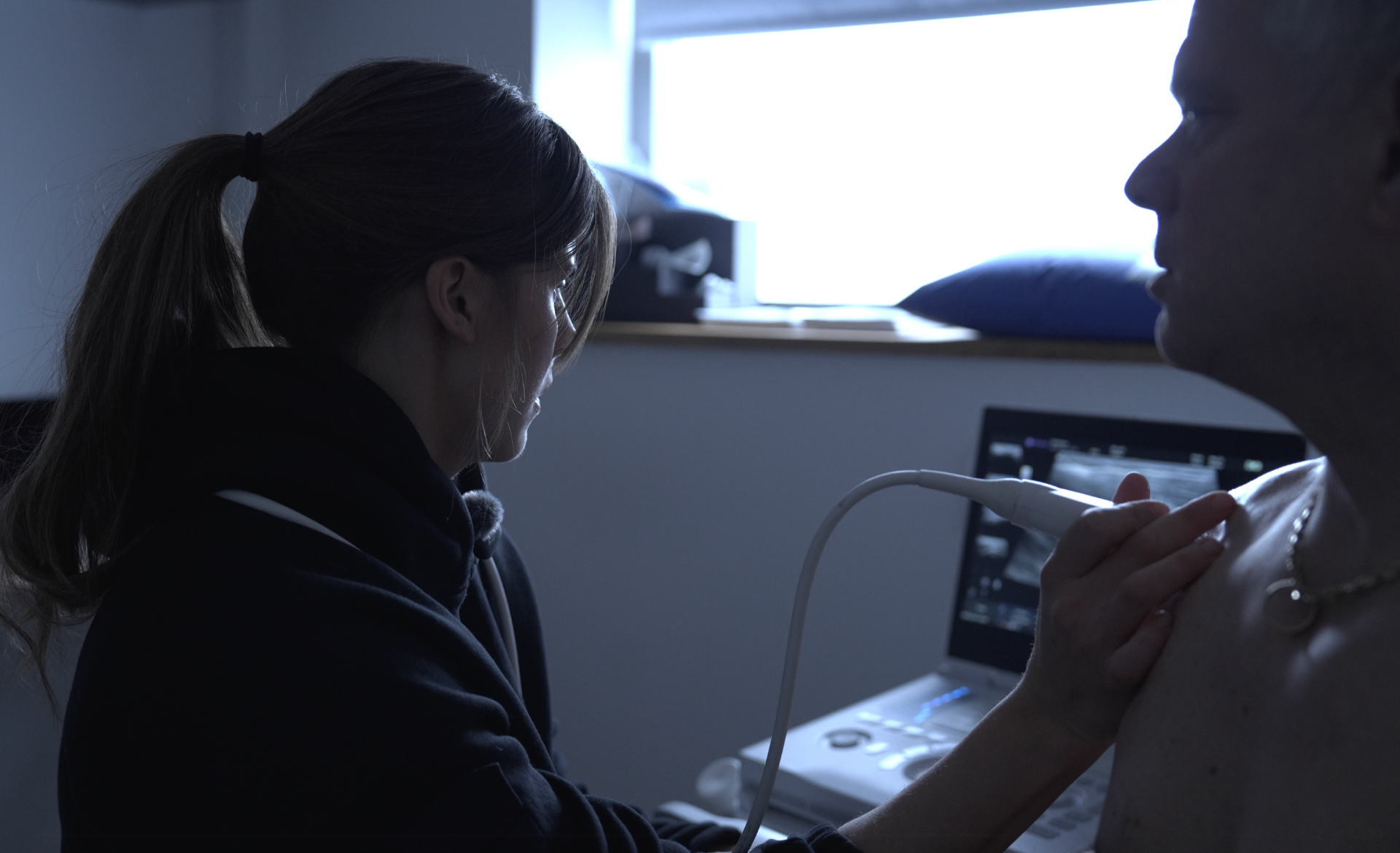
Book an examination with a physiotherapist. We investigate with ultrasound and recommend the best treatment.
Regenerative alternatives
PRP (Platelet Rich Plasma)
Concentrated growth factors from your own blood are injected into the joint under ultrasound guidance. Unlike cortisone, which can degrade tissue with repeated injections, PRP stimulates actual healing. Research shows a median delay to surgery of 5.3 years (PMID 32621139). Another study demonstrated significant pain reduction at three months that persisted at twelve months (PMID 38234679).
Orthobiologic treatment
Autologous adipose-tissue–based orthobiologic treatment combined with PRP — a small amount of your own adipose tissue is taken from the abdominal area, processed mechanically during the same visit and combined with your own PRP. The material is injected under ultrasound guidance into the treated joint. No donor cells, cultured cells, enzymatically prepared cell products, exosomes or peptides are used. Particularly relevant for early to moderate osteoarthritis (grade 1–3).
Structured rehabilitation
Strength training, mobility exercises and progressive loading — the cornerstone of all osteoarthritis treatment. We always combine regenerative injections with individually tailored rehabilitation.
Our experience shows that the combination of PRP and orthobiologic treatment together with structured rehabilitation gives the best and most lasting results.
Who can avoid surgery?
Patients with early to moderate osteoarthritis (grade 1–3) have the best prospects of responding to regenerative treatment. A thorough ultrasound examination and clinical assessment determines which treatment path is optimal.
Frequently asked questions
From our shop
Recommended supplements
Recovery
Optimized recovery for muscles, joints, and nervous system.
View categoryEssentials
The five daily essentials our doctors recommend for nearly every patient.
View categoryImmunity
Vitamins and minerals that support a robust immune system.
View category