Regenerative medicine brings together treatments that aim to help the body's own biology repair and maintain tissue — rather than only suppressing symptoms or surgically removing tissue. In osteoarthritis, where cartilage gradually breaks down, the goal is to reduce inflammation, improve function and slow degradation.
What is orthobiologic treatment?
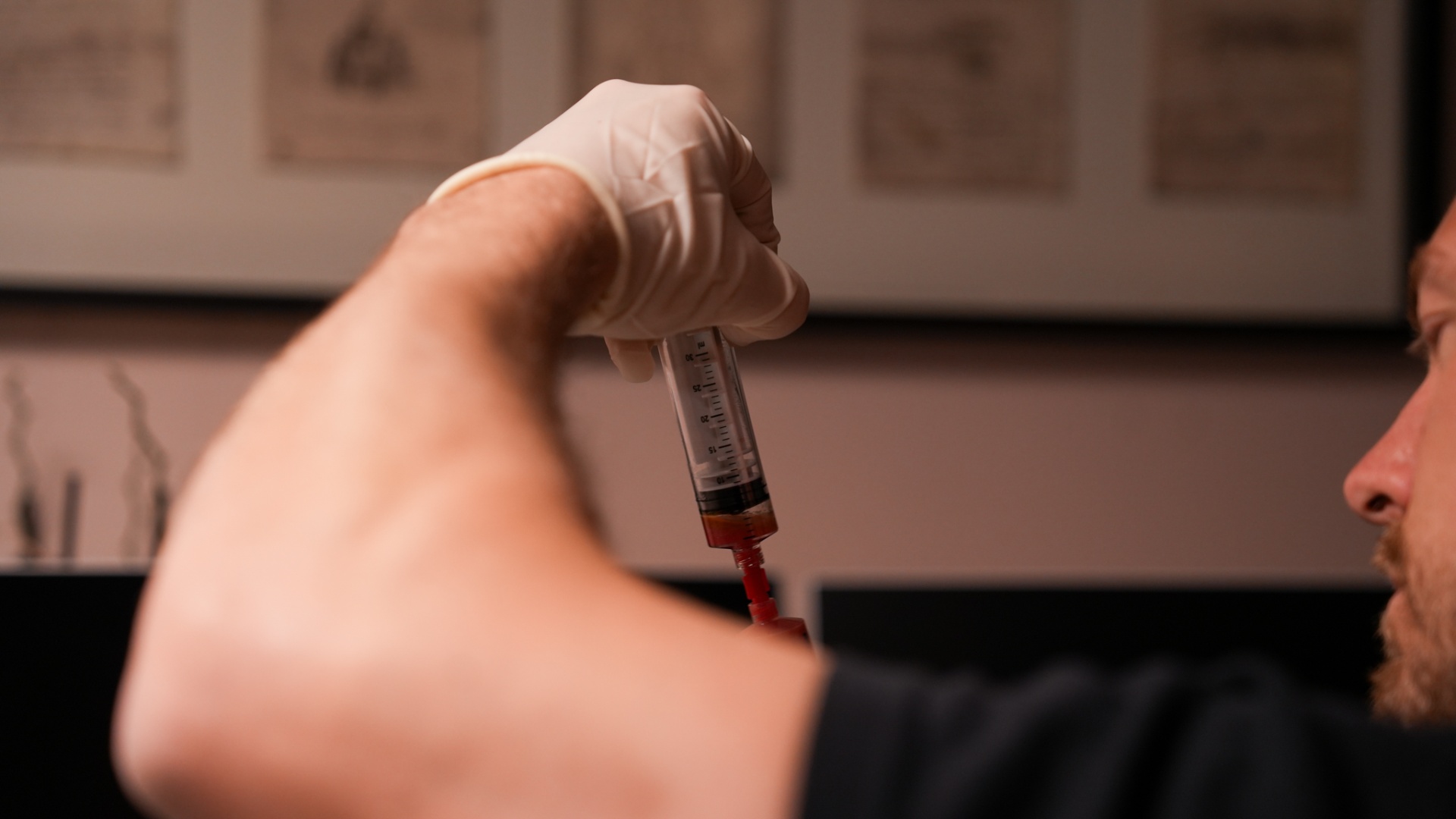
At Revi we offer autologous adipose-tissue–based orthobiologic treatment combined with PRP. A small amount of the patient's own adipose tissue is taken from the abdominal area, processed mechanically during the same visit and combined with the patient's own PRP — plasma with concentrated platelets. The material is then injected under ultrasound guidance into the treated joint. No donor cells, cultured cells, enzymatically prepared cell products, exosomes or peptides are used.
Which types of osteoarthritis can be treated?
- Knee osteoarthritis (gonarthrosis) — the most common indication
- Hip osteoarthritis (coxarthrosis)
- Shoulder joint osteoarthritis
- Thumb base osteoarthritis (CMC joint)
- Ankle osteoarthritis
Regenerative treatment is generally most relevant in early to moderate osteoarthritis (grade 1–3). In severe osteoarthritis (grade 4) with complete cartilage loss, results are more limited.
The evidence
A growing body of clinical research evaluates regenerative options for knee osteoarthritis, including PRP and autologous adipose-tissue–based treatments. Multiple RCTs and meta-analyses show pain reduction, functional improvement and a strong safety profile.
Safety profile
Larger reviews of autologous adipose-tissue–based injections in the knee report only transient adverse events — mainly mild swelling and injection-site pain — and no major complications.
Having problems?
Book an examination with a physiotherapist. We investigate with ultrasound and recommend the best treatment.
The treatment process at Revi
- Physiotherapy examination with ultrasound diagnostics
- Doctor consultation and individual treatment plan
- Mechanical processing of autologous adipose tissue and ultrasound-guided injection combined with PRP
- Follow-up with ultrasound and PRP injection after two weeks
- Structured rehabilitation program
- Follow-up at three and six months
Difference from PRP
PRP delivers concentrated growth factors from the patient's own blood. Orthobiologic treatment combines autologous adipose tissue with PRP in the same visit to provide both supportive tissue structure and growth factors. In practice they are often used in combination depending on diagnosis.
Frequently asked questions
From our shop
Recommended supplements
Recovery
Optimized recovery for muscles, joints, and nervous system.
View categoryEssentials
The five daily essentials our doctors recommend for nearly every patient.
View categoryImmunity
Vitamins and minerals that support a robust immune system.
View category